Culture
LGBTQ+ symbols beyond the rainbow: pink triangle, lambda, labrys and other signs with a history
Where the pink triangle, black triangle, lambda, labrys, lavender, green carnation, red ribbon and gender symbols come from, what they meant then and how people use them today.
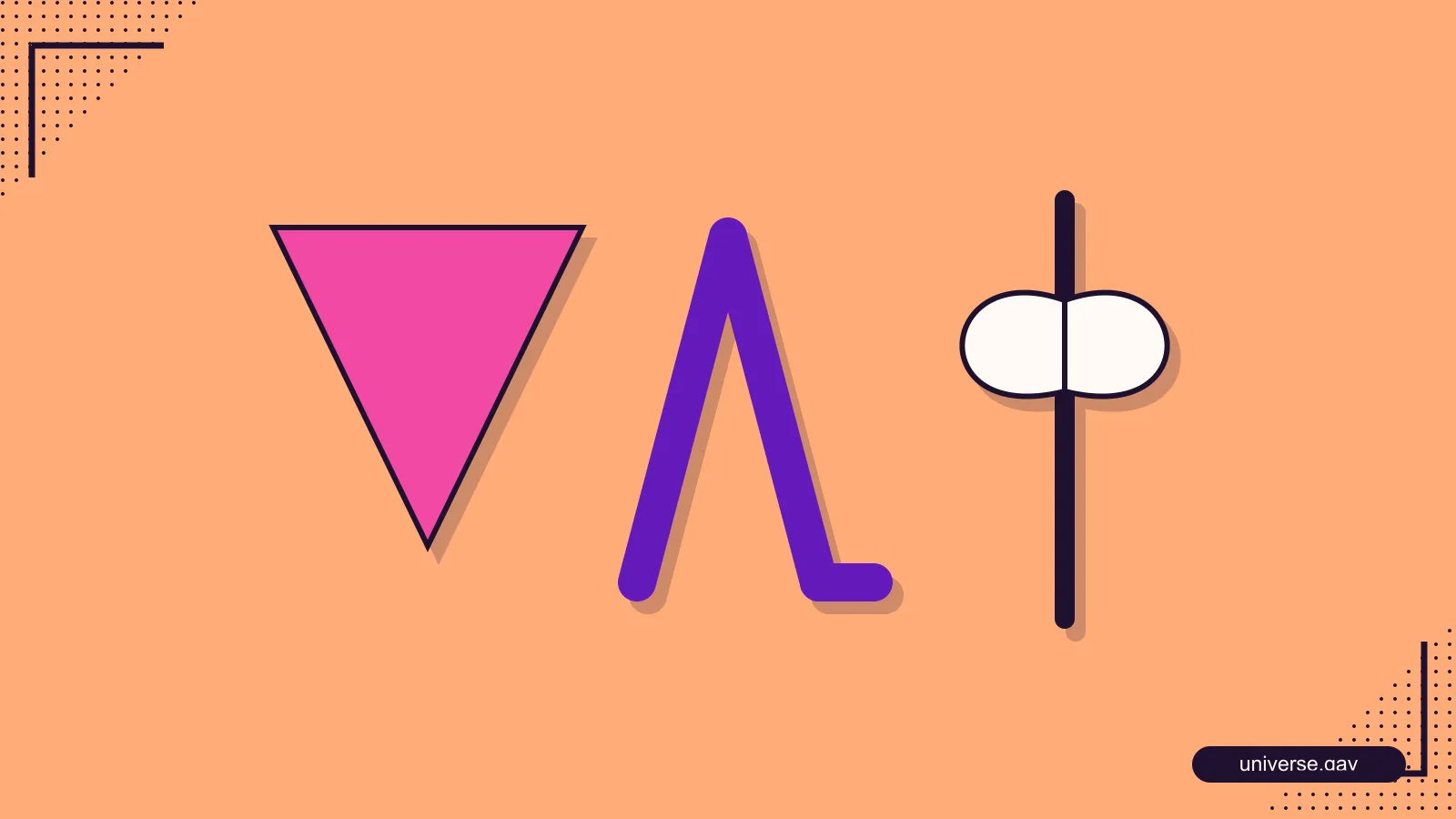
The rainbow flag is the best-known LGBTQ+ symbol in the world, but it is far from the only one. Before the rainbow appeared in 1978, and alongside it ever since, people have used triangles, letters, flowers, colours, ribbons and combined gender signs to recognise each other, remember the dead and make political statements.
Many of these symbols have dramatic histories. Some began as marks of persecution and were later reclaimed with pride. Others started as private codes, safer than saying anything out loud. Knowing where they come from helps you understand what someone means when they wear a pin, paint a mural or choose a tattoo. This guide explains the main symbols, the facts behind them and the debates around some of them.
A quick map of the main symbols
| Symbol | Origin | Main meaning today |
|---|---|---|
| Pink triangle | Badge for men imprisoned as homosexuals in Nazi camps | Memory of persecution, resistance, AIDS activism |
| Black triangle | Badge for “asocial” prisoners in Nazi camps, including some lesbians | Lesbian remembrance and pride for some |
| Lambda (λ) | Chosen by the Gay Activists Alliance in New York, 1970 | Gay and LGBTQ+ rights, legal advocacy |
| Labrys (double axe) | Ancient symbol, adopted by lesbian feminists in the 1970s | Lesbian strength and independence |
| Lavender | 20th-century association with homosexuality; “Lavender Menace”, 1970 | Lesbian and queer pride |
| Green carnation | Linked to Oscar Wilde and his circle, 1890s | Gay history and literary culture |
| Red ribbon | Created by the artists’ group Visual AIDS, 1991 | HIV and AIDS awareness and remembrance |
| Combined gender symbols | Variations on ♂ and ♀ from the 1970s onwards | Gay, lesbian, bisexual and trans identity |
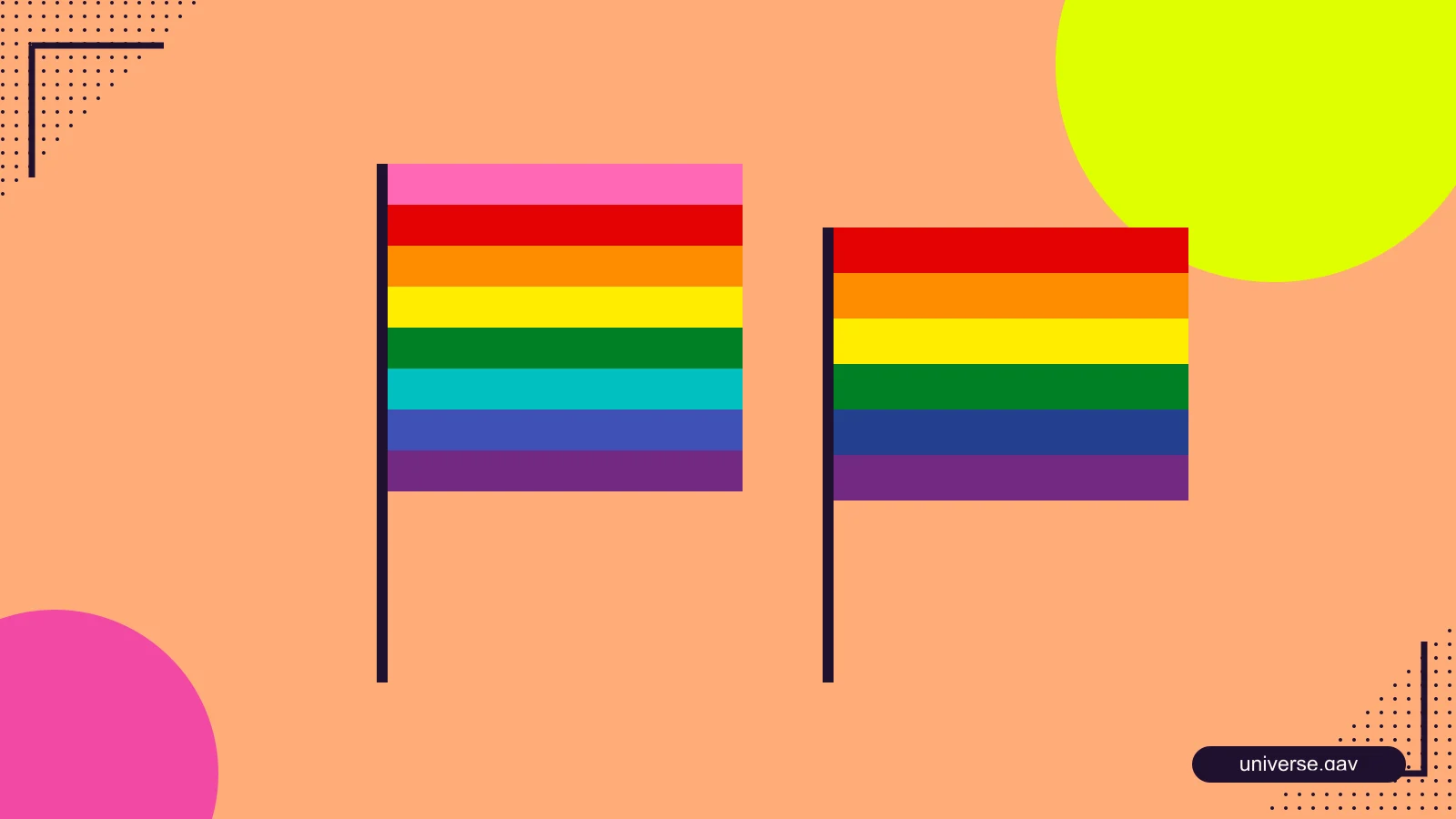
Flags, including the rainbow, the Progress Pride flag and identity flags, have their own guide: what Pride flags mean.
The pink triangle: from persecution to protest
In Nazi Germany, men convicted under Paragraph 175, the law against sex between men, could be sent to concentration camps. There, prisoners were forced to wear coloured triangles that showed why they were held. Men accused of homosexuality wore a pink triangle. Historians estimate that between 5,000 and 15,000 such men were sent to camps, where many died. They were often treated with particular brutality by guards and other prisoners.
After the war, Paragraph 175 remained in force in West Germany for years, and survivors marked with the pink triangle were not recognised as victims of Nazism for decades. Many lived in silence.
In the 1970s, gay activists in Germany and elsewhere began wearing the pink triangle as a symbol of memory and defiance. In 1987, at the height of the AIDS crisis in the United States, the Silence = Death Project created a poster showing a pink triangle, pointing upwards instead of down, on a black background with the words “SILENCE = DEATH”. The image was adopted by the protest group ACT UP and became one of the most famous activist designs of the century.
In Amsterdam, the Homomonument, opened in 1987, uses three large pink granite triangles to remember people persecuted for their sexuality. In Berlin, a memorial to homosexuals persecuted under Nazism opened in 2008.
Using it today: the pink triangle is generally welcome as a symbol of memory and pride. Because of its history, it is usually treated with more seriousness than a decorative rainbow. Some people find it painful; most see it as a way of honouring those who suffered.
The black triangle: a more complicated history
The Nazi regime did not systematically prosecute lesbians in the way it prosecuted gay men, because Paragraph 175 applied to men. Some lesbian women were, however, imprisoned under other categories, especially as “asocials”, a broad label that also included homeless people, sex workers and others the regime considered unwanted. Asocial prisoners wore a black triangle.
From the 1980s, some lesbian and feminist groups adopted the black triangle as a symbol of lesbian remembrance. Historians point out that the badge did not specifically mark lesbians, so it is best understood as a symbol of solidarity with all women persecuted as “asocial”, among them some lesbians, rather than as a dedicated lesbian badge.
Lambda: a letter chosen for a movement
In 1970, the Gay Activists Alliance in New York chose the Greek lowercase letter lambda (λ) as its emblem. The designer, Tom Doerr, is often described as having picked it because in physics lambda can represent energy or change. In 1974, an international gay rights congress in Edinburgh promoted the lambda as a symbol for the movement.
The lambda remains common in the names of organisations, especially legal and student groups. For example, Lambda Legal in the United States takes its name from it. It is a quiet symbol: recognisable to those who know it, neutral-looking to those who do not.
Labrys: an ancient axe adopted by lesbians
The labrys is a double-headed axe found in ancient Mediterranean art, especially from Minoan Crete. In the 1970s, lesbian feminists adopted it as a symbol of strength and self-sufficiency, partly because of its association with goddesses and mythological women warriors.
In 1999, a lesbian flag was designed with a labrys over an inverted black triangle on a purple background, combining several earlier symbols. Today many lesbians use newer flags instead, but the labrys still appears on jewellery, tattoos and community logos, especially among those who connect with lesbian feminist history.
Lavender and violets
Purple and lavender have been linked with homosexuality in English-speaking countries since at least the early twentieth century. The colour mixes the pink and blue traditionally associated with girls and boys, which may explain part of its meaning.
The association had dark uses too. In the United States in the 1950s, a government campaign removed thousands of people suspected of homosexuality from federal jobs. Historians call it the Lavender Scare.
In 1970, a group of lesbian activists in New York turned a hostile comment into a protest. A leading feminist had described lesbians as a “lavender menace” to the women’s movement. At a large feminist conference, activists wearing T-shirts printed with “Lavender Menace” took over the stage to demand that lesbians be included. The action helped change the movement.
Violets have their own lesbian association, often traced to the ancient Greek poet Sappho, who lived on the island of Lesbos and wrote of women wearing violet garlands. The words lesbian and sapphic both come from her.
The green carnation
At the 1892 London premiere of Oscar Wilde’s play Lady Windermere’s Fan, Wilde reportedly asked friends to wear green carnations in their buttonholes. The flower, artificially dyed, became a playful, coded signal among some men in his circle. Three years later, Wilde was convicted of “gross indecency” with men and imprisoned, and the green carnation became a symbol connected with his memory and with gay literary history.
Today it appears mostly in historical and cultural contexts, such as literary festivals, theatre productions and exhibitions about Wilde.
The red ribbon
In 1991, a group of artists in the New York organisation Visual AIDS created a simple looped red ribbon to show support for people living with HIV and AIDS and to remember those who had died. They were inspired by the yellow ribbons Americans used for soldiers at the time. The ribbon was first worn widely at that year’s Tony Awards and spread around the world. The creators chose not to copyright it, so anyone could use it.
The red ribbon is not exclusively an LGBTQ+ symbol, because HIV affects people of every orientation and gender. It remains closely tied to LGBTQ+ history, since gay and bisexual men and trans women were among the communities hit hardest in many countries, and because LGBTQ+ activists were central to the fight for treatment.
Gender symbols and combinations
The symbols ♂ and ♀, originally astronomical signs for Mars and Venus, are widely used for male and female. From the 1970s, people began combining them:
- Two interlocking ♂ symbols for gay men.
- Two interlocking ♀ symbols for lesbians.
- A combined symbol with the circle carrying both the arrow and the cross, plus a third stroked arrow, for transgender people, designed in the 1990s.
- Other combinations for bisexual, nonbinary and intersex people, with many variations.
These signs are simple to draw and easy to recognise, which is why they appear on badges, protest signs and logos. Some nonbinary people prefer symbols that do not rely on the ♂ and ♀ pair at all.
Reading symbols with care
Symbols change meaning over time and from place to place. A few useful principles:
- Context matters. A pink triangle on a memorial means something different from a pink triangle in a fashion print.
- Not every use is coded. A purple shirt or a green flower is not a secret signal. Treating everyday objects as proof of someone’s identity is a stereotype.
- History deserves accuracy. When you share the story of a symbol, check the facts. Some popular explanations are simplified or legendary, such as the exact reasons a designer chose a sign.
- Visibility is a personal choice. Wearing a symbol can tell others you are part of the community or an ally. It can also reveal more than someone wants in a hostile setting. Our guide to LGBTQ+ digital privacy explains how small signals add up, online and offline.
Symbols carry the memory of people who could not always speak freely. Learning their stories is one way of keeping that memory alive, and of understanding why a small triangle or a ribbon can still carry so much meaning.